
What Is an Eccentric Press?
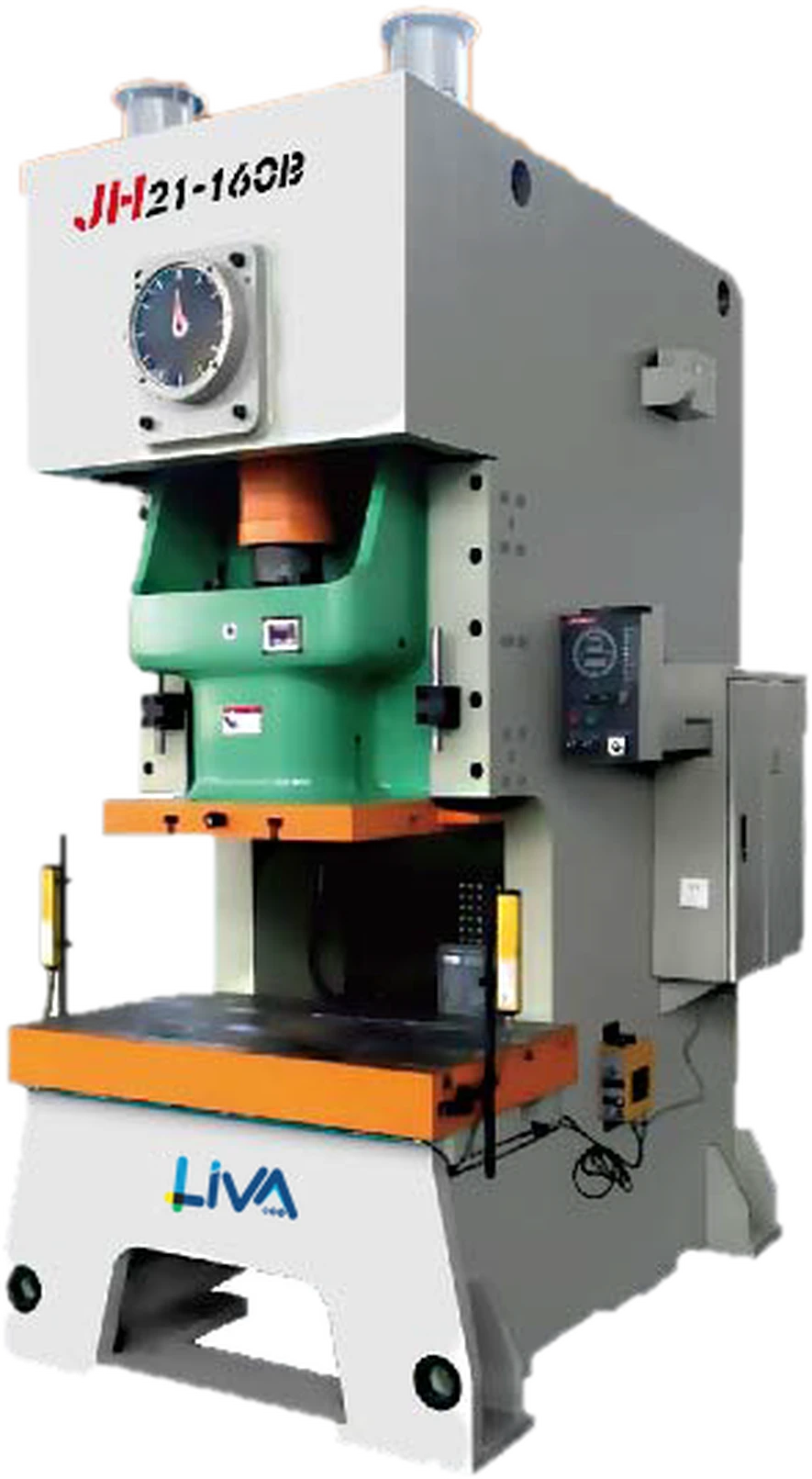
An eccentric press is a mechanical press that transfers the energy of a motor-driven flywheel to the slide through an eccentric (crank) shaft. The slide descends, the die cuts, punches or forms the sheet, then the slide returns. One stroke is made per revolution.
It is faster than a hydraulic press, so it is preferred for punching, blanking and simple forming where the same part is made in large quantities.
How Is the Required Tonnage Calculated?
For punching and blanking, the force is roughly:
F (kN) = Cutting perimeter (mm) × Sheet thickness (mm) × Shear strength (N/mm²) ÷ 1000
Shear strength is about 80% of tensile strength. For low-carbon steel it is usually taken as 250–350 N/mm²; stainless steel is higher.
Example: you blank a part with a 400 mm perimeter from 2 mm sheet. With a shear strength of 300 N/mm², F = 400 × 2 × 300 ÷ 1000 = 240 kN, about 24 tons. Adding a 30% safety margin gives about 31 tons, so a 45-ton press fits this job.
If several dies work in the same stroke (progressive die), their forces add up. Send us your part and we will check the calculation together.
Capacity Options
Livamak eccentric presses are C-type with an open frame and fixed bolster. They are offered in ten capacities from 25 to 400 tons:
| Capacity (ton) | Stroke (mm) | Strokes/min | Throat depth (mm) | Motor (kW) |
|---|---|---|---|---|
| 25 | 80 | 100 | 210 | 3 |
| 45 | 120 | 80 | 225 | 5.5 |
| 60 | 140 | 70 | 270 | 5.5 |
| 80 | 160 | 60 | 310 | 7.5 |
| 125 | 180 | 50 | 350 | 11 |
| 160 | 200 | 45 | 400 | 15 |
| 200 | 250 | 45 | 430 | 18.5 |
| 250 | 250 | 30 | 450 | 22 |
| 315 | 250 | 30 | 450 | 30 |
| 400 | 270 | 30 | 490 | 37 |
See the table on the eccentric press page for all technical dimensions.
What to Check When Choosing
- Tonnage: Add at least a 20–30% margin to the calculated force. A press delivers its rated force close to the bottom of the stroke (a few mm); force drops away from that point.
- Slide stroke: It must clear your part and feeding method. Longer strokes suit deeper parts, shorter strokes suit high speed.
- Strokes per minute: In series production this sets your output directly. Variable-speed models allow adjustment for different jobs.
- Die area: Bolster size, die height and die height adjustment must suit your die.
- Throat depth: Needed so a large sheet can reach the die.
- Feeding: Plan coil feeding, line automation or manual loading from the start.
- Safety: Ask about light curtains and two-hand controls.
Eccentric Press Vs. Hydraulic Press Vs. Press Brake
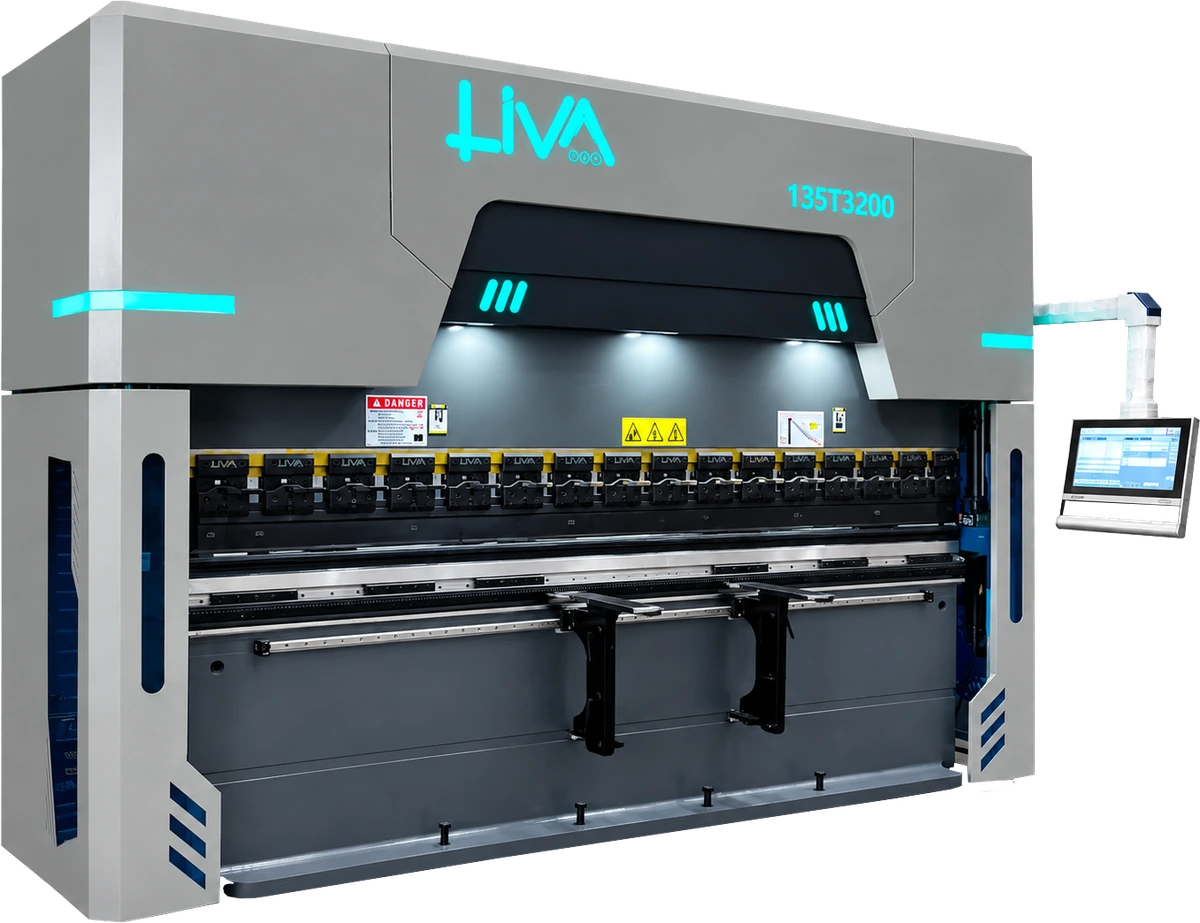
An eccentric press is for fast, serial work. A hydraulic press applies constant force across the stroke and is preferred for deep drawing and jobs that need adjustable speed. A press brake is for bending sheet; it does not punch or blank. If a part needs both bends and holes, the two machines are used together. See the CNC hybrid press brake page for bending.
Frequently Asked Questions
Is an eccentric press the same as a mechanical press?
Yes. The eccentric press is the most common type of mechanical press. It produces force through a flywheel and an eccentric shaft.
What tonnage eccentric press should I buy?
Calculate the force from cutting perimeter, sheet thickness and material, then add a 20–30% safety margin. You can do the calculation as in the example above or send it to us.
What jobs are done on an eccentric press?
Sheet punching, blanking, simple forming and serial part production with progressive dies.
Can an eccentric press bend?
It can do simple forming and die bending, but free-angle bending is done on a press brake.
What determines the price of an eccentric press?
Capacity, slide stroke, die area and options. Contact us for a quote.